
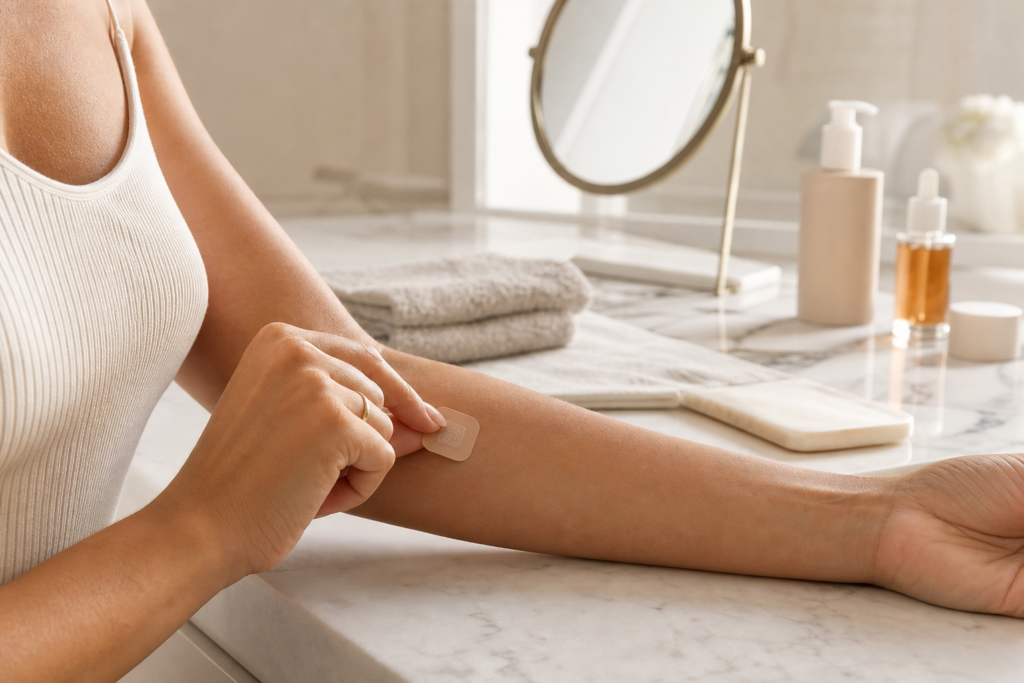
Quick answer: Sunless tanning patches suit people who want a contained, low-maintenance alternative to tanning mousse and are comfortable planning ahead. Celestvéra Tanning Microneedle Patches are a particularly good fit when avoiding DHA odor, transfer, and weekly full-body application matters more than getting visible color the same day. They are a poor fit for last-minute tanning, irritated skin, or anyone who wants precise shade control across the whole body.
The Best Fit Is a Planner, Not a Last-Minute Tanner
Celestvéra is not positioned as an instant bronzing sticker. It is a DHA-free dissolving microneedle hydrogel patch that the merchant describes as developing gradually over roughly 7–10 days, with one patch typically used every two weeks. That timing changes the buying decision: the format is most useful when you can apply it well before a holiday, event, or period when you want a warmer-looking glow.
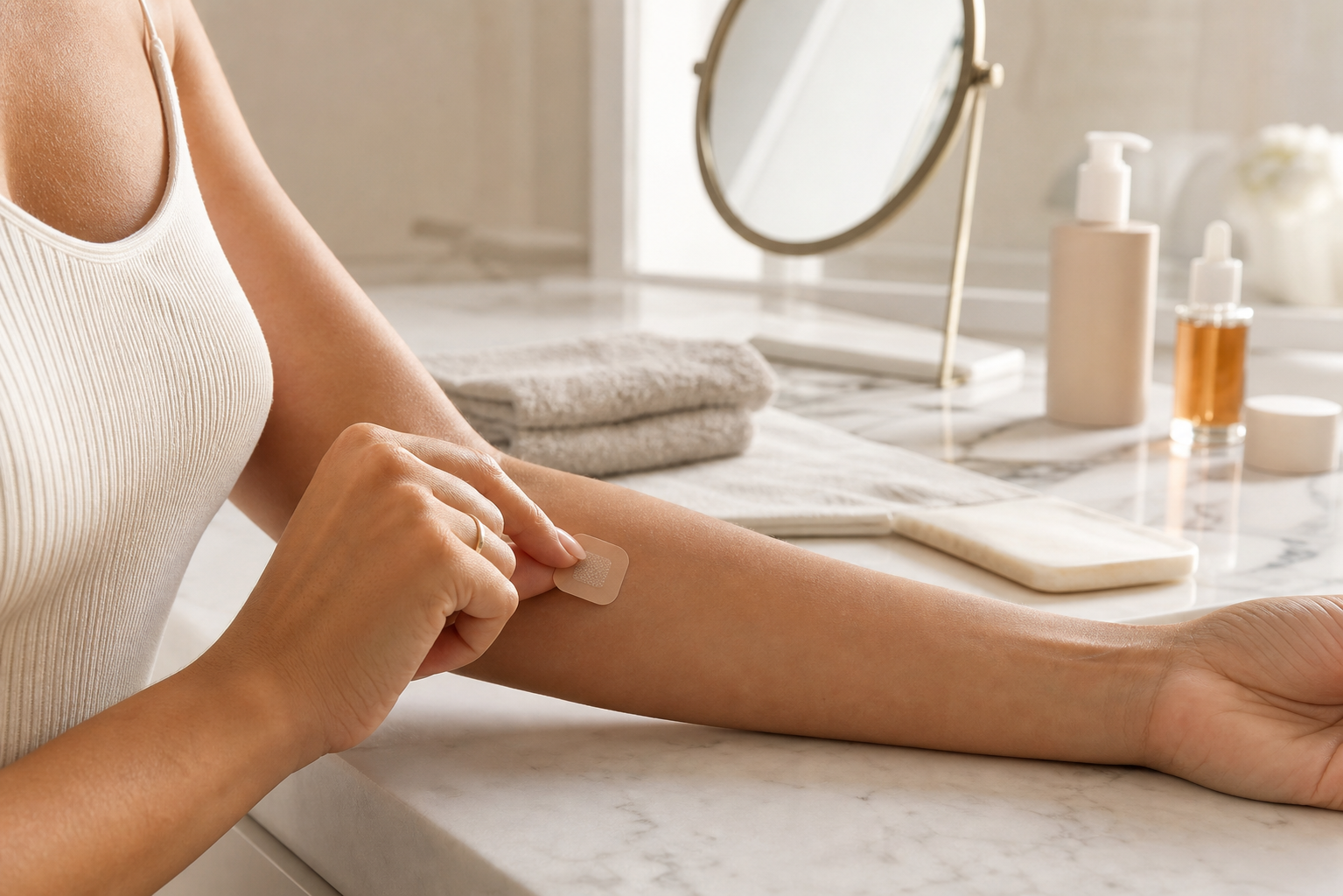
The application itself is short. Official directions specify clean, dry skin on the inner arm or inner thigh, about 90 seconds of firm pressure, and around 10 minutes of wear before removal. The trade-off is that the application is quick while the intended color development is slow.
Four Questions That Reveal Whether the Patch Format Suits You
1. Do you dislike the usual self-tanner routine?
A patch avoids spreading mousse or lotion over large areas, waiting for it to dry, and managing product transfer. That makes Celestvéra appealing to shoppers whose main frustration is the process rather than the idea of sunless color itself.
2. Can you wait for a gradual result?
If you want a visible change tonight, choose a bronzing or conventional self-tanning format designed for faster payoff. If you prefer to apply one contained product and let the intended effect develop gradually, the patch timeline is easier to accept.
3. Are you comfortable with a microneedle-style cosmetic patch?
The format uses fine dissolving microneedles rather than a smooth lotion. Some people prefer that precise, skin-tech application; others would rather avoid any product that may feel like pressure or mild prickling. Patch test first and stop if the area becomes unusually red, swollen, painful, or irritated.
4. Do you value low upkeep more than exact coverage control?
Mousse and gradual lotion let you decide exactly where every layer goes. A small patch offers a more contained routine, but it does not provide the same hands-on control over full-body application. The patch wins on convenience; conventional self-tanner wins when detailed shade placement is the priority.
| Decision | Celestvéra patch | Traditional self-tanner |
|---|---|---|
| Application | Small, contained patch area | Applied across the areas you want colored |
| Color timing | Merchant describes gradual development | Usually chosen for faster visible payoff |
| Odor and transfer | DHA-free and fragrance-free positioning | Depends on formula and application |
| Best for | Planning ahead with minimal routine work | More control over placement and timing |
Who Should Skip Sunless Tanning Patches?
- Anyone who needs a same-day tan for an event.
- People who want to adjust color precisely across each body area.
- People with broken, irritated, freshly exfoliated, or highly reactive skin.
- Anyone uncomfortable with cosmetic microneedle patches.
For a product-level assessment, read our Celestvéra Tanning Microneedle Patches review. If your main question is result credibility rather than personal fit, see Do Tanning Patches Really Work?. The patches-versus-regular-self-tanner comparison goes deeper on format differences.
Use It as a Planned Body-Care Step
- Choose intact skin on the inner arm or inner thigh.
- Make sure the area is clean and completely dry.
- Press firmly for about 90 seconds.
- Leave the patch in place for around 10 minutes, following the current product directions.
- Remove it and allow the intended effect to develop without adding another tanning product over the area.
A cosmetic glow does not provide UV protection. Continue using broad-spectrum sunscreen on exposed skin. If you are pregnant, nursing, taking medication, or managing a skin or medical condition, ask a qualified professional before trying a microneedle-style cosmetic patch.
Choose the Patch When Less Routine Work Is the Real Goal
Celestvéra makes the clearest sense for someone who already dislikes mousse, mitts, drying time, self-tanner odor, or frequent reapplication. The $34.99 trial patch is easier to justify when a short, infrequent application is the benefit you value most. Choose another format when you need instant color or precise full-body control.
Questions Shoppers Ask Before Trying a Patch
How long does a tanning patch take to work?
The merchant describes a gradual development window of about 7–10 days. Individual response can vary, so do not rely on the first application immediately before an important event.
Where do you apply Celestvéra tanning patches?
Current directions identify clean, dry skin on the inner arm or inner thigh. Do not apply to irritated, broken, or freshly exfoliated skin.
Are tanning patches the same as self-tanner?
They pursue a similar cosmetic goal, but the delivery format and routine are different. Celestvéra is positioned as a DHA-free microneedle hydrogel patch rather than a mousse, spray, or gradual lotion.
Do you still need sunscreen?
Yes. A sunless glow is not sun protection.