The short answer: bee venom in skincare is best understood as a high-interest bioactive ingredient story: tiny amounts of purified bee-venom-derived compounds are used in creams or serums to support smoother-looking, firmer-looking skin. The strongest buying case is not that it works like a medical procedure; it is that bee venom gives a formula a more active-feeling peptide story, especially when paired with moisturizers, smoothing peptides, and a consistent routine.
For WorthSift readers, bee venom is interesting for two reasons. First, there is real scientific curiosity around bee venom components such as melittin, phospholipase A2, apamin, and other peptides. Second, beauty products can make that story practical: a serum for fine-line areas, a rich cream for face and neck, or a targeted body comfort cream for massage routines.
What Is Bee Venom?
Bee venom, also called apitoxin, is the complex venom produced by honeybee worker stingers. In cosmetic products, the ingredient is not used as a sting. It is purified, processed, and added in controlled amounts as part of a topical formula. A 2019 Molecules review describes bee venom as a mixture of peptides, enzymes, and bioactive compounds, with melittin often discussed as a major component.
That distinction matters. A skincare cream is not bee venom therapy, and it is not a medical treatment. In beauty terms, bee venom is useful because it gives formulators a “skin-signal” ingredient story: the product is designed to make the skin look smoother, fresher, and more supported, without promising permanent wrinkle removal or clinical-level change.
How Bee Venom Works in a Skincare Formula
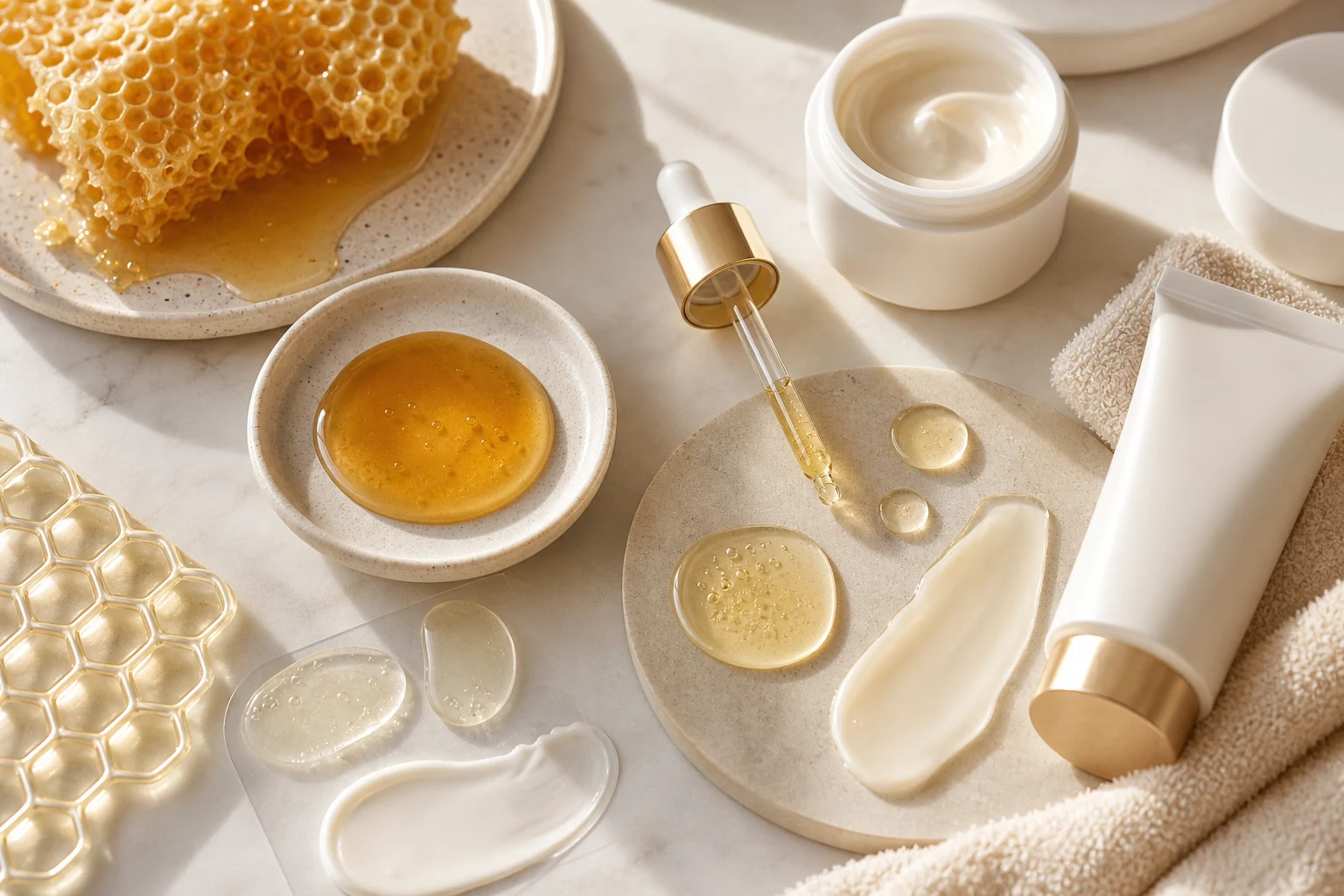
The mechanism is easiest to understand in layers. Bee venom is not a simple moisturizing ingredient like glycerin, and it is not a filler-style ingredient. It is a bioactive ingredient family, which means the formula story depends on concentration, processing, delivery system, and what else is in the cream or serum.
| Component or idea | What research discusses | Cosmetic takeaway |
|---|---|---|
| Melittin | A major peptide in bee venom, often discussed for membrane interaction and inflammatory pathway research. | Helps explain why bee venom feels like an active ingredient story, but skincare claims should stay cosmetic. |
| Phospholipase A2 | An enzyme frequently discussed in bee venom composition and immune-response research. | Useful for ingredient education; also part of why allergy caution matters. |
| Peptide signaling | Bee-venom-derived formulas are often positioned around skin response and smoothing appearance. | Best read as support for smoother-looking texture and firmer-looking skin. |
| Formula base | The cream or serum vehicle affects feel, tolerance, and routine fit. | A good bee venom product still needs a moisturizing, wearable base. |
A 2021 review on cosmetic applications of bee venom describes growing interest in topical and cosmetic uses, while also stressing that safety is a real consideration because some people can react strongly to bee venom. That is the right balance for shoppers: bee venom is exciting, but it is not an ingredient to use casually if you have a bee allergy or highly reactive skin.
The Discovery Story: From Apitherapy to Beauty Creams
Bee venom has a long history in apitherapy and traditional wellness practices, but modern beauty interest grew as researchers began isolating and studying the venom’s peptide and enzyme components. The beauty shift happened when those components were reframed for topical formulas: not as a sting, but as a controlled ingredient story for texture, fine-line appearance, and skin vitality.
Several research milestones explain why the ingredient became popular in beauty. A human study published in 2015 reported that a honeybee-venom serum was associated with improvements in facial wrinkle measurements, including wrinkle area, count, and average depth. A 2025 mouse skin-aging study reported effects on skin structure markers such as collagen fiber content, hyaluronic acid levels, and related gene expression. Those studies do not prove that every retail bee venom cream will perform the same way, but they explain why the ingredient keeps showing up in anti-wrinkle skincare conversations.
Sources: honeybee-venom serum wrinkle study and bee venom and melittin skin-aging model study.
What Benefits Can You Reasonably Expect?
The best way to evaluate bee venom skincare is to separate the ingredient story from the finished product. Bee venom can make a formula more compelling, but the final experience depends on the whole product: texture, hydration, peptides, fragrance profile, skin tolerance, and how consistently you use it.
- Smoother-looking fine lines: most relevant for mature-looking skin, expression lines, and dry-looking texture that benefits from a targeted serum or cream step.
- Firmer-looking finish: useful when bee venom is combined with a rich moisturizer or peptide-oriented formula.
- More active-feeling routine: good for shoppers who want something more interesting than a basic moisturizer.
- Body-care comfort positioning: some bee venom creams are built as massage creams for stiff-feeling or tired-feeling areas, especially when paired with ingredients like arnica, MSM, glucosamine, or chondroitin.
The small trade-off is tolerance. If your skin is easily reactive, a bee-derived ingredient deserves a patch test. If you know you are allergic to bee stings or bee venom, skip topical bee venom unless a qualified professional has told you otherwise.
Skin Compatibility Matrix
| Skin or routine need | Bee venom fit | Best product format |
|---|---|---|
| Mature-looking fine lines | Strong fit if skin tolerates active-feeling formulas | Serum or anti-wrinkle cream |
| Dry-looking texture | Strong fit when paired with a moisturizing base | Rich cream |
| Very sensitive or allergy-prone skin | Use extra caution | Patch test first; avoid if bee-allergic |
| Body massage routine | Good fit for comfort-focused creams | Targeted body cream |
| Instant wrinkle removal | Wrong expectation | Look for smoothing support, not permanent change |
WorthSift Bee Venom Products to Consider
Start with the format that matches your routine. If you want a richer face-and-neck cream, choose a cream. If you prefer a lighter targeted step before moisturizer, choose a serum. If your interest is body massage and comfort, look at the body-care creams instead of forcing a facial anti-wrinkle product into that role.
| Product | Best fit | Why it belongs here |
|---|---|---|
| Luxevéria Bee Venom Firming & Anti-Wrinkle Cream | Richer smoothing cream for face, neck, or targeted areas | Bee venom peptides plus a cream format make it the strongest ingredient-story match. |
| Luxevéria Anti-Wrinkle Serum | Serum users who want a focused step before moisturizer | Best for shoppers who prefer lighter textures and targeted fine-line routines. |
| BeeRx Natural Bee Venom Cream | Dry-looking body skin and rich cream users | A niche option when you want a bee-venom themed cream outside a classic facial serum. |
| Zentheca BeeThera Bee Venom Cream | Body comfort massage routines | Combines bee venom extract with arnica, MSM, glucosamine, and chondroitin positioning. |
Smart Buying Notes
- Pick serum for layering. The Luxevéria serum makes sense before moisturizer when you want a focused fine-line step.
- Pick cream for comfort and richness. A bee venom cream is better when dry-looking texture is part of the concern.
- Patch test first. This is especially important with bee-derived ingredients.
- Do not use on broken or irritated skin. Keep bee venom products in a calm-skin routine.
- Use SPF during the day. Smoother-looking skin still needs sun protection.
Final Recommendation
Bee venom is worth understanding because it sits at the intersection of ingredient science and high-interest beauty storytelling. The best products do not ask you to believe in a miracle. They use bee venom as part of a cosmetic formula that can support smoother-looking lines, a firmer-looking finish, and a more active-feeling routine.
This is an evidence-informed ingredient guide built from product details, published research, and WorthSift’s editorial buying framework. For face and neck, the most direct shortlist pick is Luxevéria Bee Venom Firming & Anti-Wrinkle Cream; for a lighter step, Luxevéria Anti-Wrinkle Serum is the cleaner routine fit; for body-focused shoppers, BeeRx and Zentheca give the ingredient story a richer massage-cream direction.
FAQ
Is bee venom skincare the same as getting stung?
No. A cosmetic product uses processed bee-venom-derived material in a topical formula. It should not feel like an actual sting, and it should not be used to create irritation.
Can bee venom remove wrinkles?
Keep the expectation cosmetic. Bee venom products are better judged by smoother-looking lines, a fresher finish, and routine consistency. They should not be treated as a permanent wrinkle solution.
Who should avoid bee venom skincare?
Avoid it if you have a known bee venom or bee sting allergy. Use caution if your skin is highly reactive, and do not apply it to broken, freshly irritated, or compromised skin.